Resilience is often celebrated as one of the most valuable leadership traits. We praise people who “power through,” who “keep going,” who “handle everything,” no matter how turbulent the circumstances. But what happens when resilience becomes over-resilience? When coping becomes carrying, when strength becomes self-abandonment?
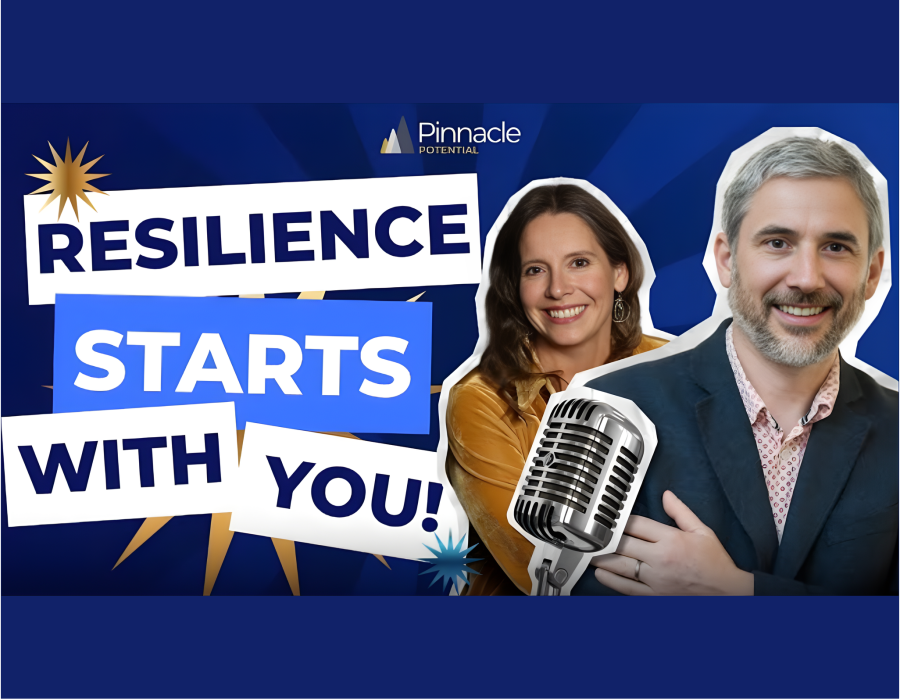
In Episode 2 of The Business of Thinking, leadership coach and keynote speaker Ali Cammelletti joins Richard Reid to explore the darker side of resilience, and why knowing your limits is as important as pushing past them.
When Early Resilience Becomes Adult Overload
Ali’s relationship with resilience began in childhood, but for all the wrong reasons. Growing up in a family marked by addiction and instability, she had no choice but to “be the adult” far too soon.
This pushed her to develop traits that helped her survive:
- Perfectionism (if everything is perfect, nothing can fall apart)
- Hyper-achievement (worth found in productivity)
- Hypervigilance (constant scanning for danger)
These “saboteurs,” as she calls them, are incredibly common among high performers, especially those who grew up in chaotic environments. They help you achieve… until they quietly start hurting you.
The Body Keeps Score, Until It Can’t
Ali shares a moment that changed her life: being diagnosed in her 30s with a tumour that wrapped around her liver, so large surgeons could hardly believe it.
Doctors blamed birth control.
Ali believes it was the weight of unprocessed trauma plus years of taking care of everyone but herself.
During the same period, she was:
- Caring for her unwell grandmother
- Navigating divorce
- Running a business
- Ignoring her own exhaustion
This is the pattern she sees in many leaders today:
“If I stop, everything will fall apart.”
The truth?
If you don’t stop, something else will fall apart, often your health.
Resilience Isn’t Just Endurance, It’s Recovery
Ali learned this the hard way. But she also learned how to rebuild resilience in a healthier way through tools she now teaches clients:
1. Ritualised Recovery
Not just holidays, daily practices that create internal spaciousness:
- Morning walks in nature
- Silence instead of multitasking
- Time without earbuds consuming content
2. Gratitude as Emotional Reset
A daily practice she began during the adoption wait for her daughter, one that grounded her through intense anxiety and uncertainty.
3. New Experiences to Expand Capacity
Ali introduces her daughter to new experiences intentionally, because novelty builds resilience muscles in ways routine cannot.
4. Knowing When “Too Much” Is Too Much
After years of constant travel, she recognised her nervous system was done, and intentionally stepped back. This awareness is resilience in its most mature form.
Why Leaders Must Model Realistic Resilience
Many leaders unconsciously teach their teams the same pattern they live by:
- Push through.
- Be strong.
- Don’t show cracks.
- Handle everything yourself.
But as Ali emphasises, this creates cultures where burnout becomes normal and self-neglect becomes expected. True resilience is the exact opposite:
It’s the ability to recover, not just to endure.
It’s the courage to set limits, not carry everything.
It’s the wisdom to rest proactively, not collapse reactively.
Leaders who model this create teams that perform sustainably, and humanely.
The Shift Every High Performer Must Make
Ali’s story is a powerful reminder:
Your body will whisper… until it screams.
Your patterns serve you… until they don’t.
Resilience helps you… until it begins to cost you more than it gives.
If you want long-term performance, personally or professionally, resilience cannot mean “never stopping.” It must mean “knowing when to pause.”
This episode is a must-listen for anyone who’s ever been praised for being “strong” but secretly knows that strength comes at a cost.
Follow the podcast for more weekly insights from Richard Reid and his guests: