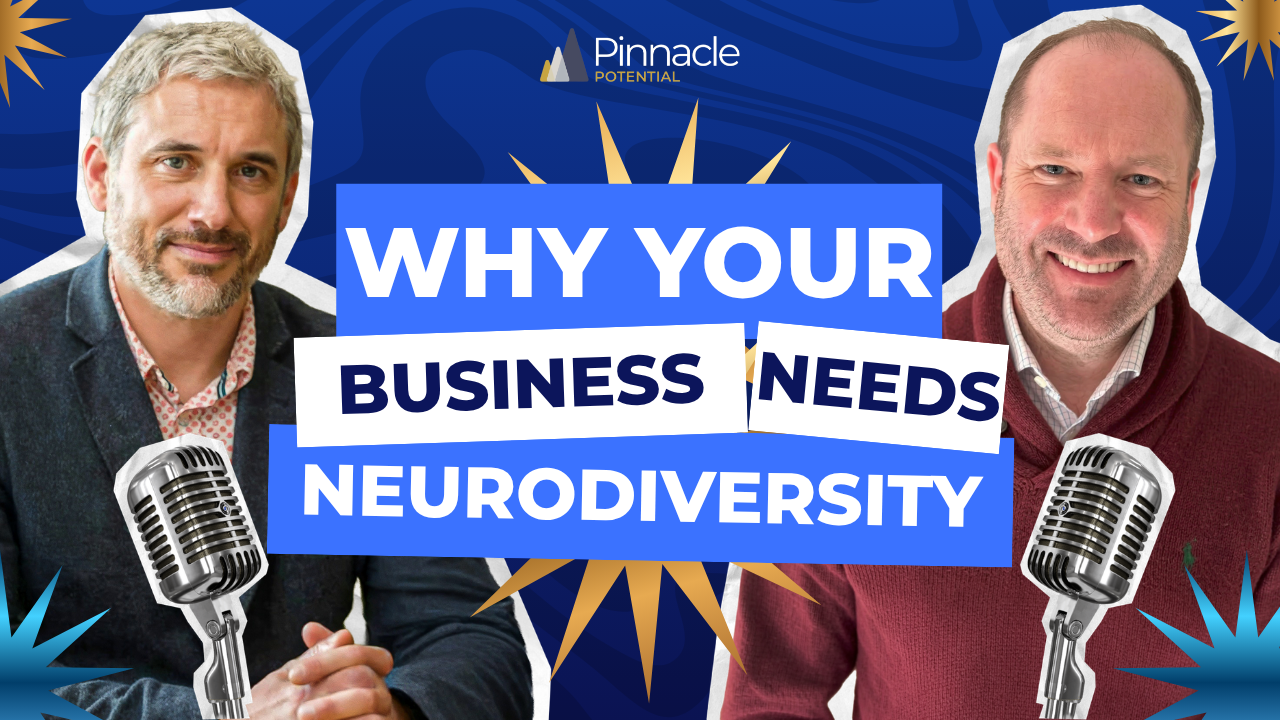
In this episode of The Business of Thinking, Richard Reid speaks with Robert Annis, a business psychologist specialising in neurodiversity and neurodivergence, about how organisations can better understand, support and benefit from different ways of thinking.
Robert’s work sits at the intersection of psychology, leadership and organisational culture. Rather than focusing on psychology in the traditional clinical sense, his work explores how people think, behave and interact within organisations, and how leaders can create environments where more people can thrive.
A key theme of the conversation is the need to move beyond seeing neurodivergence as a problem to be managed. Robert explains that around 15–20% of the population is neurodivergent, which means this is not a niche issue. It affects a significant number of people in every workplace, including those with autism, ADHD, dyslexia, dyspraxia and other forms of cognitive difference.
Robert’s own interest in the subject deepened after being clinically diagnosed as autistic and ADHD later in life. Like many adults who receive a later diagnosis, this new understanding helped him make sense of previous experiences and challenges. It also raised important questions about how others had interpreted his behaviour over the years.
Richard and Robert discuss how many adults first recognise their own neurodivergence when their children go through assessment. This is often because neurodivergence can run through families, reflecting natural variation in the human brain rather than anything abnormal or defective.
For organisations, Robert argues that the opportunity is much bigger than simply making adjustments. When businesses create environments that are more inclusive for neurodivergent people, they often improve conditions for everyone. He compares this to dropped kerbs, which may be designed for wheelchair users but also help parents with prams, people with suitcases and anyone moving heavy items.
The same principle applies at work. Clearer communication, psychological safety, flexible thinking and better listening do not only support neurodivergent employees. They help build stronger, more innovative and more resilient organisations.
Robert is particularly critical of traditional leadership models that rely too heavily on one person at the top having all the answers. This, he argues, can create groupthink, silence concerns and prevent organisations from spotting risks early. Instead, businesses need cultures where people feel safe to challenge, question and contribute.
This is where leadership becomes crucial. Robert makes the point that leaders are not simply responsible for delivery; they are responsible for culture. Yet too often, senior leaders invest less time in their own development than they expect from the wider workforce. This sends a powerful message about what the organisation truly values.
To support meaningful change, Robert and his team have developed the Neuro Standard, an accreditation designed to help organisations build more inclusive, neurodivergent-friendly cultures over time. Rather than being a one-off badge, it encourages organisations to evidence ongoing commitment, review progress and take ownership of long-term change.
Ultimately, Robert’s message is clear: human difference is not a weakness. It is one of our greatest strengths. When organisations embrace neurodiversity, they do more than support individuals. They unlock better thinking, better decision-making and better cultures for everyone.